
By Gordon Bates, Executive Committee Member and the Head of Integrated Biologics at Lonza

In this interview with Gordon Bates, Executive Committee Member and Head of Integrated Biologics at Lonza, we discuss the company’s recent $1.2 billion acquisition of a biologics manufacturing site in Vacaville, California. This strategic investment aims to enhance capacity and meet rising demand in the biopharmaceutical sector. We explore the motivations behind this purchase, its significance in current supply chain trends, and Lonza’s focus on emerging biologics modalities to drive innovation and growth.
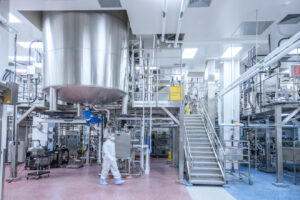 Q. Lonza has been investing in large-scale biologics manufacturing, including its recent acquisition of a large-scale biologics site in California. What motivated this specific purchase and what factors are driving similar investments?
We’re seeing strong demand for commercial manufacturing capacity, and this acquisition strengthens our ability to meet that demand.
Lonza has acquired the Vacaville manufacturing site from Roche for USD 1.2 billion. This multi-product cGMP facility is a strategic addition to our network, providing significant new capacity to support the growing global need for high-quality, large-scale mammalian manufacturing. This site has a proven track record of delivering high-quality products, including monoclonal antibodies and recombinant proteins.
With approximately 330,000 liters of bioreactor capacity, the Vacaville site is one of the largest biologics manufacturing facilities in the world. It is GMP-approved by both the FDA and EMA and has a strong commercial track record, having produced nine different product families since 2000.
In the medium term, Lonza will continue to manufacture products that Roche currently makes at the site with committed volumes already in place. Overall, this is a high-impact acquisition with immediate value and long-term strategic significance.
Q. Regarding the California site, how strategically important was it to purchase a location in the United States, particularly amid reshoring, friendshoring and nearshoring trends in the supply chain?
The Vacaville site complements our existing biologics facilities on the U.S. East Coast, including our Portsmouth site—and strengthens our broader network across Europe and Asia. What’s especially exciting is that it gives us a solid footprint on the U.S. West Coast, near the San Francisco Bay Area — a major hub for pharma and biotech. Being closer to our customers in this region allows us to be more agile and better positioned to support their growth.
Q. Every acquisition, merger and expansion comes with opportunity costs. What strategic priorities are you focusing on in the current bio/pharma environment, especially considering Lonza’s new business structure? What current and future trends you see in this space?
The biologics CDMO market continues to show positive growth, with an expected CAGR between 9% and 11% through 2029. In mammalian, we expect that manufacturing demand will continue to outpace supply, especially for large-scale manufacturing, driven by a robust pipeline of biologics. This includes a growing number of high-volume monoclonal antibody candidates in clinical trials and increasing demand for commercial-stage mammalian-derived therapies fueled by expanding patient populations.
To meet demand, we are making significant investments to grow our manufacturing footprint and offer customers expedited access to large-scale capacity. We are focused on staying ahead of the curve to help bring the next generation of biologics to market. Alongside investments in our facilities, we’re also making targeted acquisitions to build capabilities in areas where the market is moving fast. For example, major investments in a specific modality like bioconjugates are calibrated to support the growth of our partners and address market demand from consumers. Ultimately, we’re focused on building a global infrastructure that isn’t just reactive to the market but positioned to help our customers shape it for years to come.
In the preclinical space, speed to clinic while minimizing risk remains a top priority for our customers, and we’re continuously innovating to meet this need. We’ve accelerated timelines for toxicology material supply, now among the fastest in the industry, to enable earlier initiation of tox studies while maintaining highly competitive drug substance GMP release timelines. To further de-risk an accelerated development journey, we recently introduced a new offering with guaranteed titers and stability across a range of molecule types. This offering is backed by the strength of our expression systems, which have now helped bring over 100 molecules to market, and our expertise to help achieve quality from the start. These efforts reflect our commitment to enabling a faster and more reliable path to the clinic and, ultimately, to patients.
Q. What specific modalities are included in the company’s Integrated Biologics business platform? Which next-generation biologics modalities are you seeing the most growth in?
Lonza’s new business platform structure is designed to strengthen synergies across technologies, bringing together the specialized capabilities needed to accelerate next-generation therapeutics. Our Integrated Biologics platform combines mammalian and drug product services, leveraging our expertise to accelerate and de-risk the path to market. We offer best-in-class, end-to-end offerings—from licensing and clinical development to drug substance and drug product manufacturing. The platform spans the technology lifecycle and supports a broad range of biologics, including monoclonal antibodies, bispecific antibodies, and bioconjugates. It plays a central role in scaling innovation as demand grows for more targeted and multifunctional therapies.
Currently, we’re seeing strong momentum in bispecific antibodies, which bind two antigens to unlock mechanisms like dual inhibition and immune redirection. With 11 FDA approvals and expanding applications in autoimmune and neurological diseases, bispecifics represent a key area of innovation. Lonza supports their development through mammalian expression systems, protein engineering, and digital optimization tools.
Bioconjugates sit at the intersection of our Integrated Biologics and Advanced Synthesis platforms. While antibody-drug conjugates (ADCs) fall under Advanced Synthesis due to their cytotoxic payloads, their antibodies and linkers are developed and manufactured within Integrated Biologics’ mammalian services. This cross-platform integration is essential as the field expands. More than 200 ADCs are currently in development, and the global market is projected to more than double by 2029. Together, our platforms help bring next-generation therapies to market faster, with fewer barriers from bench to bedside.