
For International Women’s Day, we asked three leaders from across the sciences to share the moments, challenges and supports that shaped their careers. From Amy Westfall’s path from management consulting into biotech program leadership, to Marjolein Biezen’s evolution from chemical analyst to quality manager, and Lucia Kovac’s steady commitment to chemistry and mentorship, their stories show different routes to impact, and a shared belief in persistence, curiosity and sponsorship. They reflect on practical steps that helped them advance: mentors who took risks on nontraditional profiles, deliberate skill-building, and workplace flexibility that makes long careers possible. Read on for candid advice and tangible ideas for boosting female participation and leadership across the scientific pipeline.
Codexis
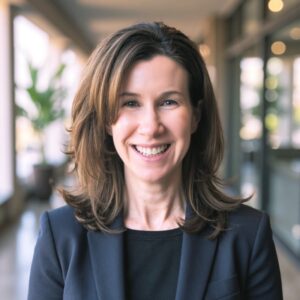 Amy Westfall, Senior Vice President, Strategy & Program Management
What career path led you to your current role, and were there any pivotal moments along the way?
I began my career in management consulting, which is a great training ground. It taught me how to break down messy problems, design practical processes, and work quickly with teams across different industries and organizational styles. From there, I gravitated toward operational roles – first in biotech, then in high tech – always in positions that were centered on connecting cross-functional teams and driving complex programs towards resolution.
A pivotal moment for me was making the decision to leave a large, established tech company to join a biotech start-up. It was a risk I wouldn’t have taken earlier in my career, but it turned out to be transformative. It broadened my thinking about career opportunities, and I learned that I really thrive in that kind of environment, the fast pace, the ambiguity, the opportunity to wear many hats and see the direct impact of your work. It redefined my understanding of what I want from my career.
My current role feels like a culmination of all these experiences – it brings together everything I enjoy doing: leading and collaborating with teams, tackling complex analytical challenges, strategic planning, program management, and process design. It gives me the opportunity to apply and grow these skills while learning a new area of technology, which I find very motivating.
Have you observed or experienced any barriers to career progression in the pharmaceutical industry, and how did you navigate them?
Honestly, I haven’t experienced major barriers to career progression in biopharma – but that doesn’t mean it’s been frictionless. The biggest hurdle for me was pursuing roles that traditionally favor candidates with a scientific background or advanced degree (PhD), which is not me. Understandably, that can shape assumptions about what I’m able to contribute or how quickly I can ramp up.
What made the difference for me was connecting with leaders who were willing to take a bet on a different profile – managers who saw the value of strong generalist skills, particularly when paired with subject matter experts, in translating strategy into execution. Perhaps more than anything else, those leaders had a big hand in shaping my career path. At the same time, I’ve always felt a responsibility to earn that trust. For me, that meant doing the work to build credibility, investing a lot of time to learn the science and the industry context, often late at night, eg, after the kids were in bed.
It also helped that I’ve never been overly attached to titles or levels. I’ve been willing to make lateral moves, and occasionally take a step back on paper – if it gave me the chance to build a capability I knew I’d need or to get closer to the work that mattered. Especially in a field that rewards deep expertise, I’ve found that being a committed, curious generalist – and backing that up with effort and results, can be a real differentiator.
How important is mentorship and visible female leadership in encouraging more women to pursue and progress in science?
Visible female leadership matters a lot – and I say that from personal experience. Seeing women in senior roles helped me picture what the path could look like for me, especially during the years when I was trying to balance building a career and being truly present for my family. There are all kinds of advice out there about how to do this but seeing it modeled in a way that felt tangible made it more real for me. If you can see it, you can be it. Having a diverse set of female leaders to look to helped me understand that there isn’t one ‘right’ way to lead or mold to fit in shaping your career.
Mentorship has been just as important for me. Many of the most meaningful moves I’ve made were influenced by mentors who took the time to understand what I wanted, pushed me to be honest about the trade-offs I was willing to make, and helped me see opportunities I might have overlooked. The best mentors didn’t just offer advice – they asked the hard questions, helped me build confidence in my own judgment, and when it mattered, they advocated for me. Having mentors that were truly in my corner not only helped to accelerate my progression, but more importantly, led me to roles that I found truly meaningful.
I don’t think you can overstate the importance of mentorship for creating opportunities and informing the choices that ultimately make up a career.
Have you seen workplace culture shift in recent years regarding diversity, inclusion, and support for women in leadership?
I’ve been lucky to have worked in organizations that have genuinely ‘walked the talk’ on diversity, inclusion, and supporting women in leadership, so my experience may be a bit rosier than what others have seen. But even with that caveat, I do think there’s been a noticeable cultural shift in recent years. These conversations are more visible and more explicit than they used to be, and there’s a stronger expectation, from employees and leaders, that companies invest in diversity and inclusion.
It’s a real positive that the conversation has moved beyond “it’s the right thing to do” (though it is) to a clearer understanding that diversity also improves outcomes. Diverse teams make better decisions and drive more creative solutions – and in fast-moving, high-stakes environments like biopharma, that matters. When teams bring different perspectives and experiences, you get better debates, better problem-solving, and it’s just more fun.
The other big shift I’ve seen – and one that I think makes a difference for women in leadership, is flexibility in how work gets done. COVID probably accelerated this, but people now have a much greater ability to integrate the demands of work with their personal lives, certainly more than I experienced earlier in my career. When people have that kind of flexibility, it gives them the space to be more focused and energized at work and they’re more likely to stay in the game longer.
In your opinion, what more can the pharmaceutical industry do to increase female participation and leadership at all levels?
There’s a lot that we can do, building on the progress that’s happening already, to support women at all stages of their careers. Starting early, we can help more girls to explore an interest in science as something they can picture themselves doing. Partnerships with schools and community programs, internships, and simple exposure to what a day in the life of a scientist or someone who supports scientific applications looks like can help younger women see themselves in these careers.
Then when women are ready to enter the industry, a lot comes down to access to great first roles and strong early managers. Ensuring a strong female representation in the candidate (and interviewer) pool can help get women in the door. From there, the focus shifts to how we help women grow their skill sets, expand their experiences, and take on bigger leadership roles over time. Going back to a couple of the earlier themes, this is where mentorship and flexibility matter: leaders helping women to identify what’s most meaningful for them, craft their individual paths and navigate the world of possible roles.
If we invest across all these stages – early exposure, a strong on-ramp into the industry, and deliberate support for growth – we can build a deeper bench of women who will become the leaders and role models the next generation is looking for.
Tjoapack
 Marjolein Biezen (Quality Manager IQA)
What first sparked your interest in science, and when did you realise it could be a career path?
I began my career as a chemical analyst. Being responsible for ICH stability and ongoing stability studies. My curiosity about systems, processes, and continuous improvement led me into QA, where I could connect the scientific foundation with organisational quality standards.
Today, as Quality Manager IQA, that same initial spark, wanting to understand, improve, and safeguard quality, still drives me.
What’s one challenge you’ve faced as a woman in science, and what helped you overcome it?
I used to feel quite uncomfortable giving presentations. I found it difficult to feel fully at ease speaking in front of an audience. To overcome that, I practiced intentionally, asked for feedback, and reminded the goal of the presentation is not to be perfect. Over time and through repetition, my confidence had grown.
What advice would you give to young women or girls considering a career in science who aren’t sure they belong?
If you’re not sure you belong in science, know that many of us have felt that way at some point. Doubt doesn’t mean you’re not capable – it often just means you’re stepping into something new and challenging. Curiosity, persistence, and a willingness to learn matter far more than confidence at the beginning. Science needs different perspectives and ways of thinking. If you’re curious and passionate, you belong.
Ofichem
 Author: Lucia Kovac, Head of Analysis, Ofichem
What first sparked your interest in science, and when did you realise it could be a career path?
My love for science started with curiosity. I was always reading, asking questions, and wanting to understand how the world works. From a young age, I was drawn to the natural sciences because discovery felt meaningful, it was a way to help people by creating something new or improving what already exists. Choosing chemistry allowed me to turn that curiosity into a profession, combining passion with real-world impact. Over time, I realised that science isn’t just a career path; it’s a way of thinking, problem-solving, and contributing to society in a very tangible and lasting way.
What’s one challenge you’ve faced as a woman in science, and what helped you overcome it?
One of the biggest challenges came after my studies, when I realised how competitive the field can be and how difficult it is to balance a scientific career with family life, particularly during maternity leave. There were moments of uncertainty and self-doubt, but what truly helped me was the people around me. I was fortunate to have supporting mentors, both women and men, who believed in me, encouraged my growth, and reminded me that careers are built over time. Their trust helped me stay confident, resilient, and focused on the bigger picture.
What advice would you give to young women or girls considering a career in science who aren’t sure they belong?
Today, girls and young women have more support than ever to study what truly interests them and that’s something to embrace. My advice is to explore: visit schools or universities you’re interested in, talk to students or alumni, and don’t hesitate to ask teachers or professors questions about study programs and career options. Seek internships early to understand what different paths look like in practice. Most importantly, find a mentor or someone you trust who can guide and support you. If you’re curious and willing to learn, you absolutely belong in science.